

How to Choose an Online Perfume Store in the Philippines
You're on your phone, staring at two perfume tabs, one has a lower price, the other has cleaner photos, clearer policies, and a checkout that doesn't feel sketchy. In the Philippines, that choice isn't just about which bottle smells better. It's a decision about who gets your money, who ships the order, and whether the store can handle the sale after you tap pay.
The smart way to buy from an online perfume store is to treat it like a trust-and-logistics decision first, and a scent decision second. You're not only picking a fragrance, you're picking the seller's payment flow, delivery discipline, refund behaviour, and authenticity habits. That matters now because Philippine digital payments represented 52.8% of total monthly retail-payment transactions in 2023, up from 42.1% in 2022 and 14% in 2019, so checkout is no longer the exception, it's the normal path to purchase (BSP e-payments report).
Table of Contents
- What Filipino Shoppers Actually Need from an Online Perfume Store
- Quick Legitimacy Checks Before You Add Anything to Cart
- Why the Cheapest Perfume Listing Is Rarely the Best Deal
- Reading a Perfume Product Page Like an Inspector
- Choosing Middle Eastern Scents That Survive Philippine Weather
- Checkout, Shipping, and the Full Order-to-Doorstep Path
- Common Scams and Refund Pitfalls to Watch For
What Filipino Shoppers Actually Need from an Online Perfume Store
A Metro Manila buyer usually opens two tabs, compares the same scent, and decides which seller feels safer before the break is over. That is the definitive test. A perfume listing only matters if the store behind it can take your money, ship cleanly, and fix mistakes without turning the process into a chase.
Four things you are actually paying for
You are paying for legitimacy, which means the store clearly exists and can be reached if something goes wrong. You are paying for fragrance fit, because a scent that behaves well in a cold office can turn harsh in humid weather. You are paying for checkout that does not get in the way, because mobile buyers drop weak payment flows fast. You are paying for post-purchase safety, which protects you when the parcel arrives wrong, damaged, or late.
Digital buying already fits the way people shop here. Digital payments represented 52.8% of retail-payment transactions in 2023, and the monetary value of digital payments reached PHP 6.1 trillion, so a perfume purchase is usually happening inside a digital checkout, not through a cash handoff. A serious store should make the PHP total, shipping logic, and payment confirmation easy to see before you commit.
Open two tabs for the same Lattafa EDP and compare the footer business details, the returns window in days, and whether the PHP total updates before the PayPal button. That simple check tells you more than glossy bottle photos do.
Middle Eastern-style fragrances make sense for Filipino buyers because they often give stronger scent profiles, longer wear, and more variety than many local shelves. Still, do not get distracted by notes and bottle shots alone. A store that sells perfumes without visible policies, clear contact details, and a believable fulfilment setup is asking you to take a blind risk.
Judge the seller like a logistics partner first. The scent comes later.
Quick Legitimacy Checks Before You Add Anything to Cart
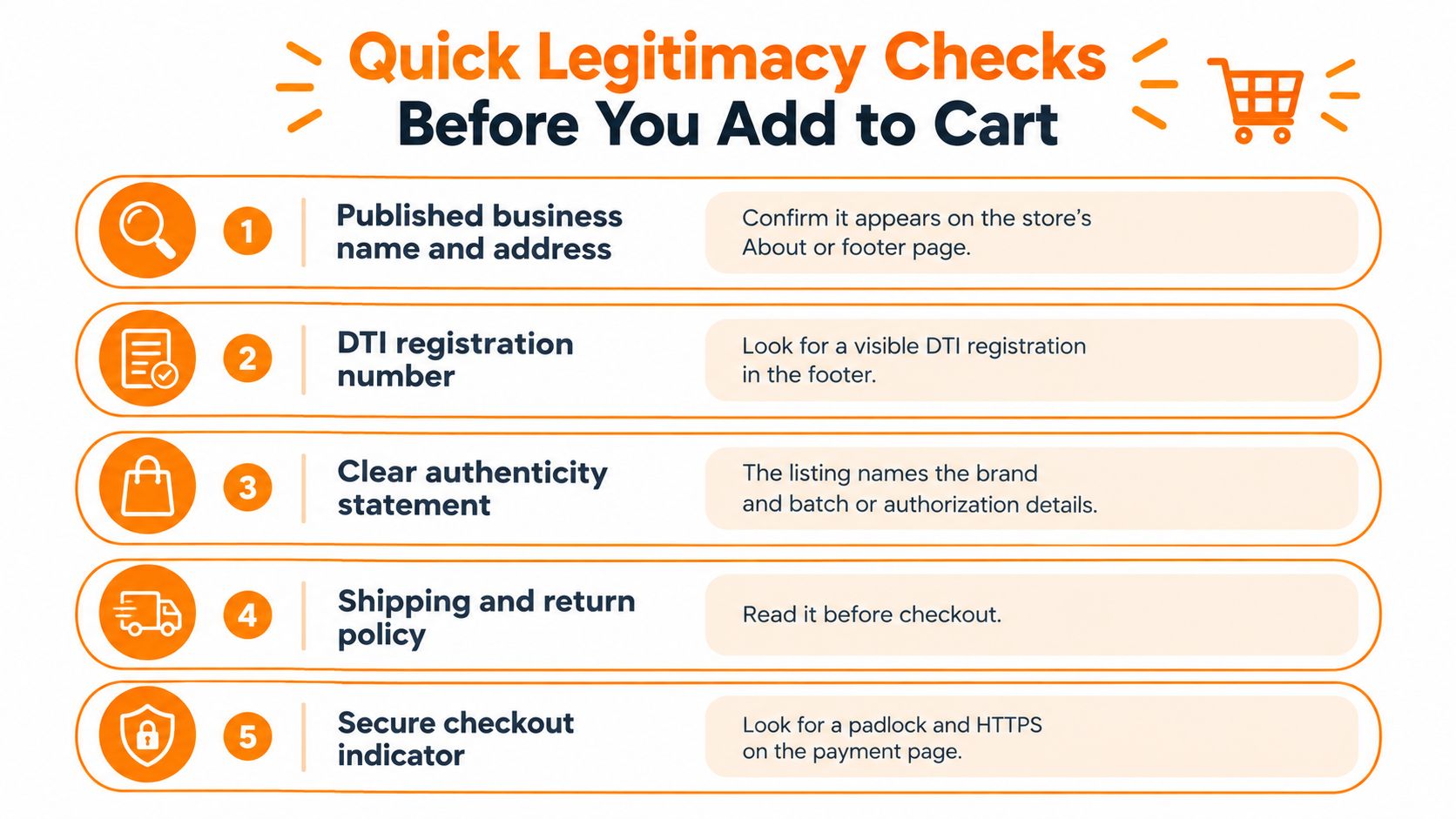
The fastest filter is simple. If a store hides who it is, where it operates, or how it handles returns, skip it. Don't waste time trying to “feel out” a seller in chat when the basics are missing.
What to check in under five minutes
Look for a published business name and address in the footer or About page. Check whether the site shows a DTI registration number, because visible business identity is now a basic buyer filter, not a nice extra. Philippine regulators reported a 33% increase in e-commerce complaints to roughly 36,000 in 2024, so visible credentials matter more than glossy product copy (Retail Asia report).
Then read the return, privacy, and terms pages before you even think about adding to cart. A store that won't state what happens when the wrong bottle arrives is telling you how disputes will go. That's not a seller to “figure out later.” It's a seller to avoid now.
Practical rule: if the legal identity is hidden, the rest of the listing doesn't matter yet.
Proof-of-transaction pages help, but only if they're useful. Good proof shows order numbers, redacted initials, and a consistent transaction record, not loose screenshots that look copied and pasted from anywhere. That's a stronger trust signal than a big “authentic” banner with no support behind it.
One useful example of a product page you can inspect, without treating it as the only option, is Armaf Odyssey Mega. Its listing format shows how a fragrance page can still stay product-focused while giving enough information to evaluate the item as a real purchase, not a mystery box.
For a more detailed authenticity workflow, the store's own authentic perfume guide for the Philippines is the kind of page a cautious buyer should expect any serious seller to have. If those basics aren't visible, don't overthink it. Move on.
Why the Cheapest Perfume Listing Is Rarely the Best Deal
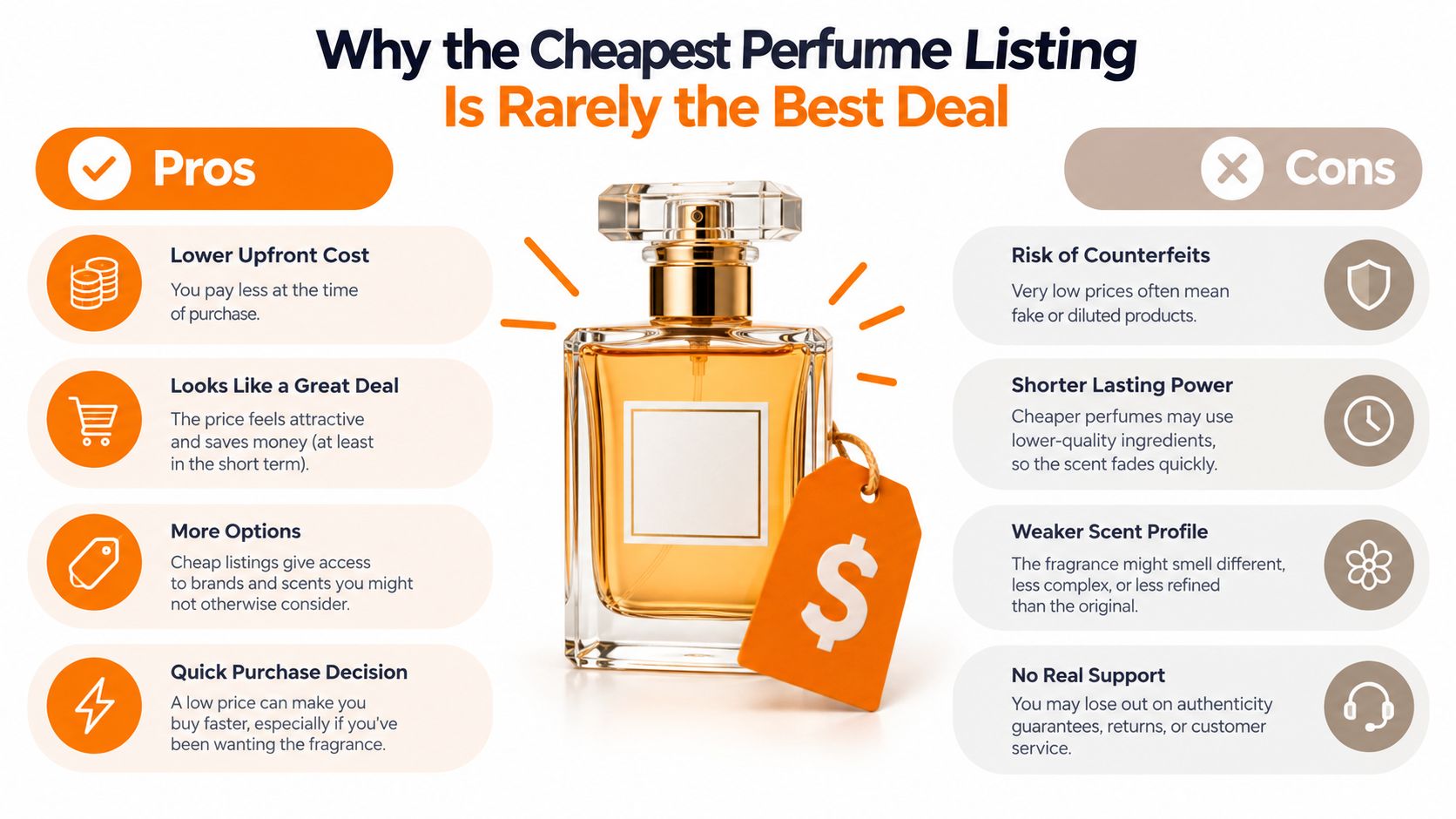
The lowest sticker price is often the most expensive mistake. A suspiciously cheap bottle can be a counterfeit, a grey-market import with no clear support, or a listing that looks fine until you need a refund. The brand name may be the same, but the buyer risk is not.
Price only matters after trust is equalised
Philippine authorities seized counterfeit goods valued at roughly ₱18.64 billion from January to September 2025, and only 14% of surveyed Philippine shoppers said they would give up authenticity signals for a better deal (GMA News report). That tells you what sensible buyers already know, a fake bargain isn't a bargain if it leaves you with no remedy.
There's also a difference between grey-market stock, tester units, and outright counterfeits. Grey-market bottles may be genuine but harder to support. Tester units can be real but come with different presentation. Counterfeits are straight losses. The same fragrance name can sit behind all three, which is why price alone is a terrible way to judge value.
A shop with clear authenticity signals and a fair return path can absolutely justify a small premium.
Use this rule when comparing two listings of the same bottle. Equalise for shipping, return terms, authenticity evidence, and customer-service access before you compare the sticker price. If one seller is cheaper but hides the basics, that's not savings. That's risk pushed onto you.
Don't be fooled by flashy “too good to miss” banners either. If a deal is far below what the market normally suggests and the page gives you no explanation, assume the seller expects you not to ask questions. That's a bad sign in any category, and perfume is no exception.
The better question isn't, “Which one is cheapest?” It's, “Which one still makes sense if something goes wrong?”
Reading a Perfume Product Page Like an Inspector
A strong product page should help you verify, not just admire. Don't skim the hero image and stop there. Read the page the way a warehouse checker would, with one eye on the bottle and the other on the paperwork.
The cues that matter most
| Product Page Inspection Cues | What it should show | Red flag |
|---|---|---|
| Fragrance concentration | Clear EDP, EDT, or similar label | Vague or missing concentration |
| Batch or lot detail | Any visible production or traceability reference | No traceability at all |
| Ingredient or disclosure info | Basic product and compliance detail | Empty descriptions with marketing fluff only |
| Importer or distributor statement | Who is responsible for the stock | No seller identity beyond a username |
| Final PHP total | Total cost before payment confirmation | Surprise fees on the last screen |
The final PHP total should not appear as a surprise at the end. Hidden costs and extra fields are punishing because online cart abandonment is already high, with one cited 2024 benchmark putting it at about 70.19%, and mobile carts at roughly 80% versus about 69% on desktop (Shopify benchmark). If a perfume store buries shipping or forces unnecessary steps, that friction is part of the product, whether the seller admits it or not.
What to document before you move on
Take a screenshot of the listing title, bottle size, concentration, stated notes, seller policies, and visible price. If the store shows customer ratings, pay attention to the count of reviews as much as the stars. A tiny catalog with a few reviews can still be fine, but a full page with no support detail is thin.
One more thing. Don't let “inspired by” language distract you from authenticity information. A reference to a designer composition can help you orient your nose, but it should never be louder than the traceability cues. The product page should answer, first and foremost, what exactly you're buying.
Choosing Middle Eastern Scents That Survive Philippine Weather
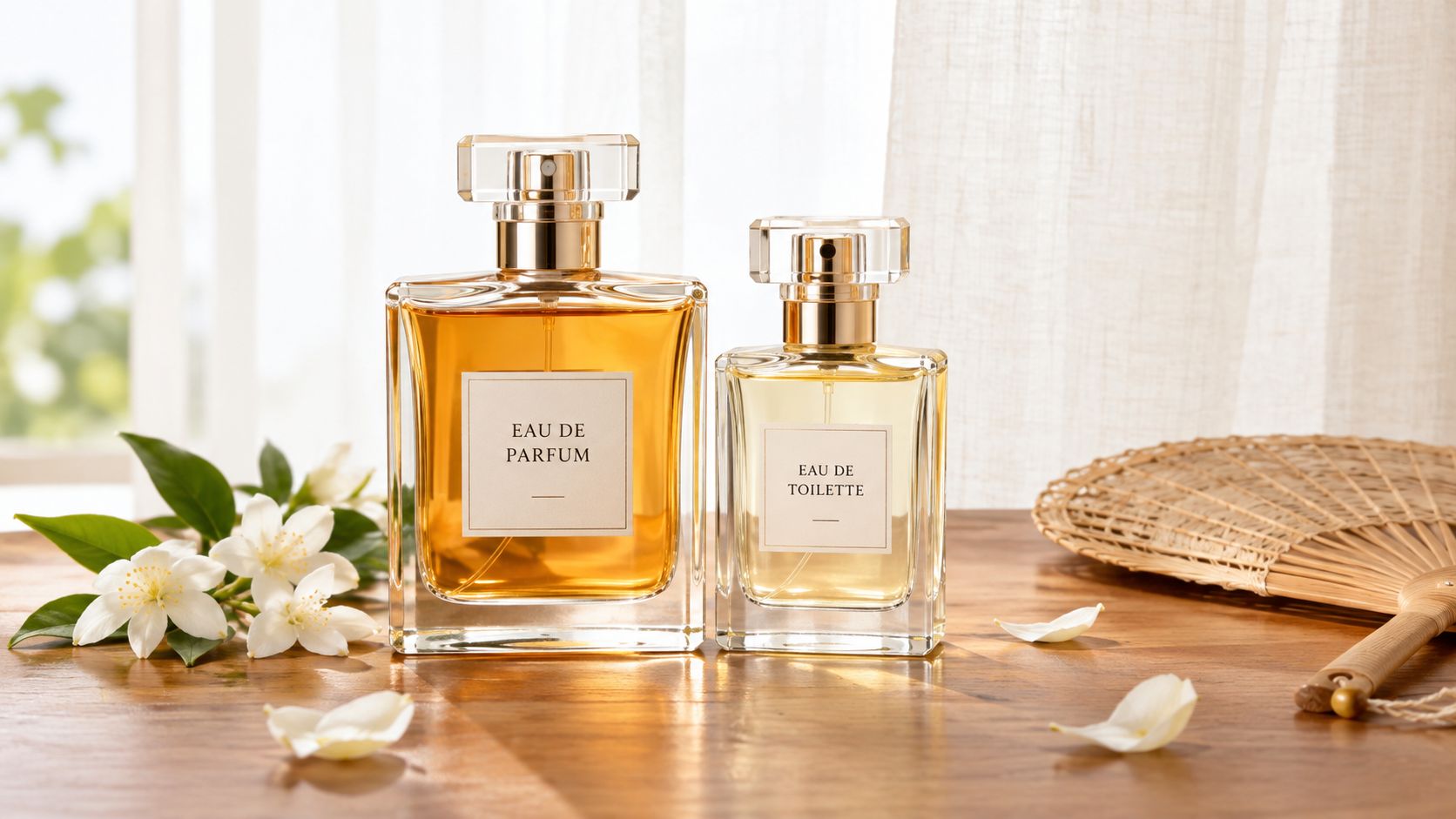
Heat changes everything. A scent that feels smooth in air-conditioning can become dense, sharp, or clingy once you step outside. That's why perfume choice in Metro Manila needs a weather test, not just a note pyramid.
Match concentration and character to the day
If you want something for everyday use, start by checking concentration first. Eau de parfum usually makes more sense than a lighter format when you want a stronger, longer-lasting presence, but even then, the structure matters. In humid weather, heavier oud, amber, and musk-led scents can feel richer and more noticeable, while citrus and cleaner floral styles usually stay easier for daytime wear.
That doesn't mean loud is better. In a crowded jeepney, a classroom, a clinic, or an enclosed office, a forceful scent can become a problem fast. A quieter fragrance often reads as more polished because it respects the room instead of taking it over.
For practical browsing, treat product pages that show men's and women's collections, plus best-seller groupings, as a faster route to narrowing the field. If the fragrance page also references a comparable designer style, that can help with orientation, but it should only be a clue, not the whole decision. If you're buying for a gift and don't know the recipient's taste, keep the first buy conservative and avoid anything too experimental.
One category worth checking is Middle East perfumes in the Philippines, because that's where many local buyers start when they want richer, longer-wearing profiles without guessing blindly.
Use skin and clothing differently
In tropical heat, application matters as much as the juice itself. Skin lets the scent evolve naturally, while clothing can help a fragrance stay present longer. If you want to test performance, spray sparingly, wear it through a normal day, and see whether it feels balanced after commuting and indoor air-conditioning.
Don't chase maximum projection just because the bottle says strong. The better buy is the one that still feels appropriate after lunch, not the one that dominates the elevator at 8 a.m.
Checkout, Shipping, and the Full Order-to-Doorstep Path
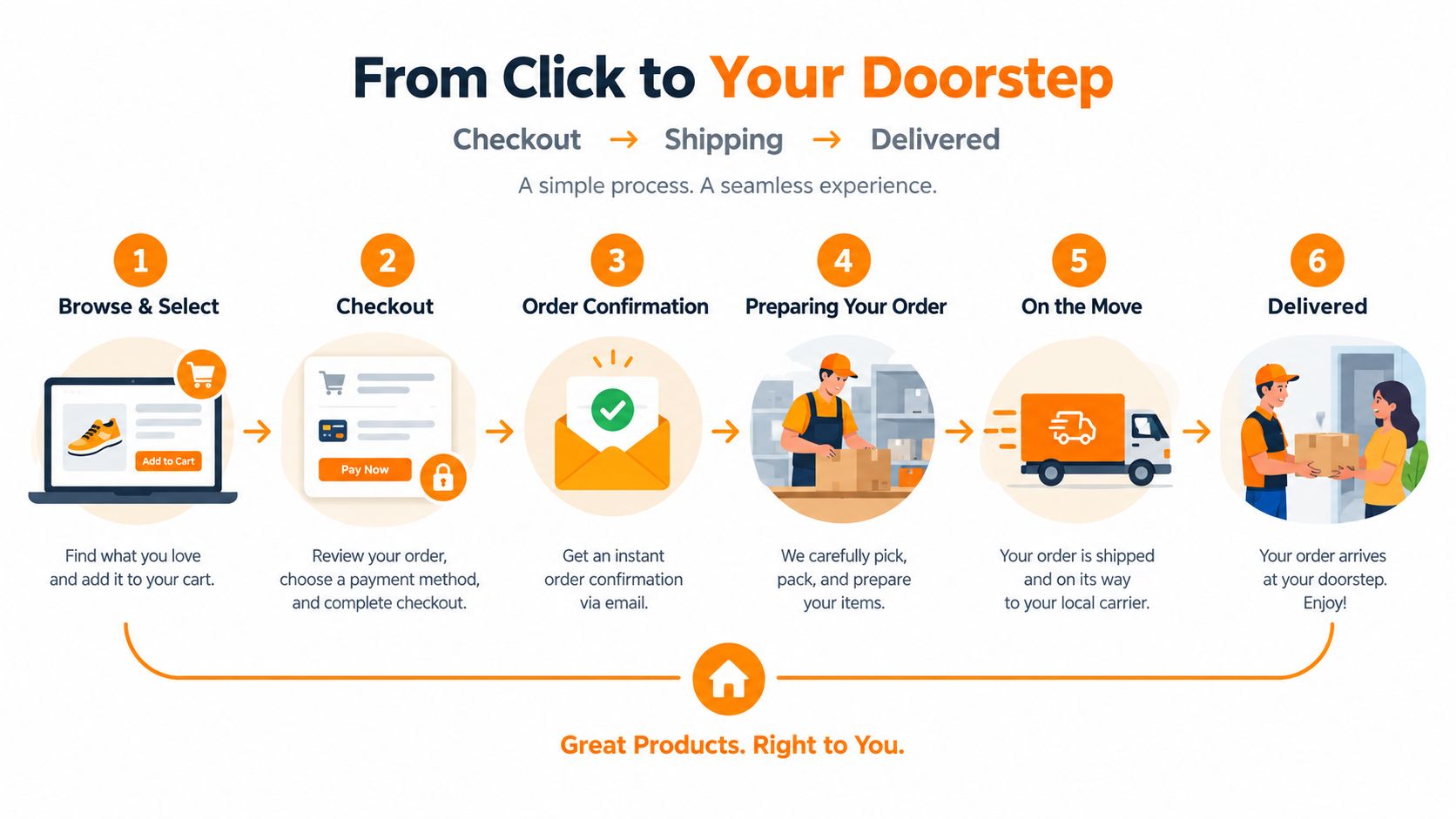
The buying experience should stay clear from cart to doorstep. If you're in Cebu, Davao, or anywhere outside Metro Manila, the store should show you what happens next without making you chase the answer in chat.
What a clean order path looks like
A good checkout shows the full PHP total before the final screen. It also offers payment routes that fit a mobile-first market, like card payment, e-wallet-compatible checkout, bank transfer options, and PayPal when available. That matters because digital payments represented 64.69% of Philippine retail transaction volume by 2025, so mobile-friendly checkout is table stakes, not a bonus (BSP 2025 e-payments report).
Shipping should feel just as transparent. Metro Manila buyers should see whether delivery is quick and trackable, while provincial buyers should see realistic expectations for their area. A tracking number without useful updates is weak. A tracking number that actually moves is what you want.
Useful rule: free shipping isn't pure savings, it should make sense against basket size and margin, not just sound generous.
That matters when a store sets a free-shipping threshold. If the threshold pushes you to add another item you already wanted, fine. If it pushes you into buying something you don't need, you've stopped saving money and started spending for the badge.
A seller's shipping policy should also tell you what happens if the parcel arrives damaged. Before you sign at the door, photograph the box, the seal, and the item condition while it's still unopened. If the bottle is wrong or leaking, those photos are the first thing you'll need.
For a clearer shipping breakdown, the store's Philippines shipping guide is the kind of policy page that should exist before you buy, not after a dispute begins.
Common Scams and Refund Pitfalls to Watch For
Some perfume scams are obvious, others are slick. The obvious ones are the cheapest listings with no business identity. The slick ones are sellers who talk plenty in private chat but never put the important parts on the page.
The patterns that should make you stop
A seller who only confirms stock after a chat conversation is already making the process harder than it should be. A listing priced far below comparable offers, with no explanation, should make you suspicious immediately. If the seller refuses to show any batch or traceability detail, don't argue, just walk.
Return policy wording also matters. If a seller expects you to pay return shipping on the wrong or leaking bottle, the policy is doing too much work for the seller and too little for you. A strong return page should be specific, not theatrical. It should tell you the window, the condition rules, and the steps for escalation.
A polite question about the return window usually tells you more than the policy page does.
Ask directly whether the seller accepts disputes for damage in transit, wrong item, or suspected authenticity problems. If the answer gets vague, that's your answer. Good sellers don't need to dance around basic questions.
What you should record before opening the parcel is simple:
- Order number and seller name
- Photos of the outer box before opening
- Photos of the seal, packing, and bottle
- Any visible damage, leaks, or mismatched item details
- A screenshot of the original listing and policy page
That record helps if you need to push back on a wrong bottle or a dead return process. It also keeps the conversation factual instead of emotional, which is exactly how you want a dispute to start.
A practical first-time buyer checklist is short. Check identity, check scent fit, check checkout, check protection. If a store fails the first one, you don't need to test the rest.
One sensible starting point is a store that already shows a published Makati City presence, a Philippines mobile contact, policy pages, proof-related pages, and a PHP checkout path, with Middle Eastern houses like Lattafa, Afnan, Armaf, Rasasi, Arabiyat, Rayhaan, and French Avenue in the catalogue. That's not the only place to buy, but it is the kind of structure that makes a first order feel less like a gamble and more like a normal purchase. Start with a smaller bottle or a best-seller entry, then see how the seller handles the complete order.
If you want a practical place to begin, Dubai Fragrance Shop PH gives you the kind of setup this guide values, visible business details, policy pages, Middle Eastern fragrance options, and a checkout built for Philippine buyers. Visit Dubai Fragrance Shop PH if you want to compare a few bottles against the checklist above and start with a smaller, safer first order.