

Vanilla Caramel Perfume Guide: Notes, Picks, and Tips
You've just stepped out of a crowded MRT carriage, the afternoon air is thick, and your vanilla caramel perfume smells less like a soft dessert and more like warm syrup. Later, inside an air-conditioned office, the same fragrance may settle into a quiet, creamy skin scent. That change is normal. Heat, humidity, skin, concentration, and spray placement all affect how a gourmand wears in the Philippines.
Vanilla caramel is appealing because it feels familiar without smelling like a plain vanilla body spray. It can suggest leche flan, toasted sugar, creamy pastry, coffee, or soft amber, depending on the formula. The trick is choosing the right style for your setting, applying enough for presence but not so much that your commute becomes cloying, and checking that an imported bottle is authentic before paying.
Table of Contents
- What Vanilla Caramel Perfume Actually Smells Like
- The Note Pyramid Behind Vanilla Caramel Compositions
- Designer, Middle Eastern, and Inspired Alternatives Compared
- How to Apply and Layer Vanilla Caramel Perfume
- Seasonal and Climate Wearability in the Philippines
- Buying Vanilla Caramel Perfume Safely in the Philippines
- Matching Vanilla Caramel to Your Budget and Occasion
What Vanilla Caramel Perfume Actually Smells Like
Think of a Metro Manila morning. You spray before leaving home, walk towards the station, and notice a creamy sweetness rising from your skin as the temperature climbs. A well-made vanilla caramel perfume should feel rounded and warm, with vanilla softening the burnt-sugar effect of caramel. It's closer to warm leche flan fresh from the pot than to an aggressively sweet synthetic body spray.
The distinction matters. Plain vanilla may smell milky, woody, powdery, or softly musky. Plain caramel can be darker, sharper, and more like melted sugar. Vanilla caramel combines the two: vanilla supplies creaminess, while caramel adds toasted sweetness and a slightly sticky impression. Some formulas also use amber, benzoin, tonka bean, or musk to keep the blend from smelling flat.
For a helpful introduction to the wider family, the gourmand perfume guide explains how dessert-inspired notes fit into modern fragrance styles.
Three styles you'll meet
- Vanilla-led: Soft, creamy, and often easier for daily wear. It may include musk, sandalwood, coconut, or light florals.
- Caramel-led: Sweeter and more noticeable, with burnt sugar, toffee, praline, or coffee effects. This is the style most likely to feel heavy in direct heat.
- Salted caramel: A sweeter note balanced by an airy, mineral, or slightly savoury effect. Salt doesn't make the perfume smell like table salt, but it can reduce the impression of syrup.
On Philippine skin, warmth can make the sweet base feel louder. In an open-air commute, a rich caramel formula may project quickly and become dense around the neck. In a cool office, it often behaves more smoothly, with the vanilla and amber showing through after the opening fades.
Don't buy this family expecting a fresh, aquatic scent. Vanilla caramel usually suits people who enjoy creamy, buttery, dessert-like warmth and want a fragrance that feels cosy, approachable, and slightly indulgent. If you prefer citrus, green tea, or clean laundry accords, start with a lighter vanilla composition rather than the darkest caramel oil.
The Note Pyramid Behind Vanilla Caramel Compositions
A fragrance pyramid is a useful reading tool, not a strict timetable. It describes the way a perfume is designed to unfold, from the first impression to the material that remains closest to the skin.
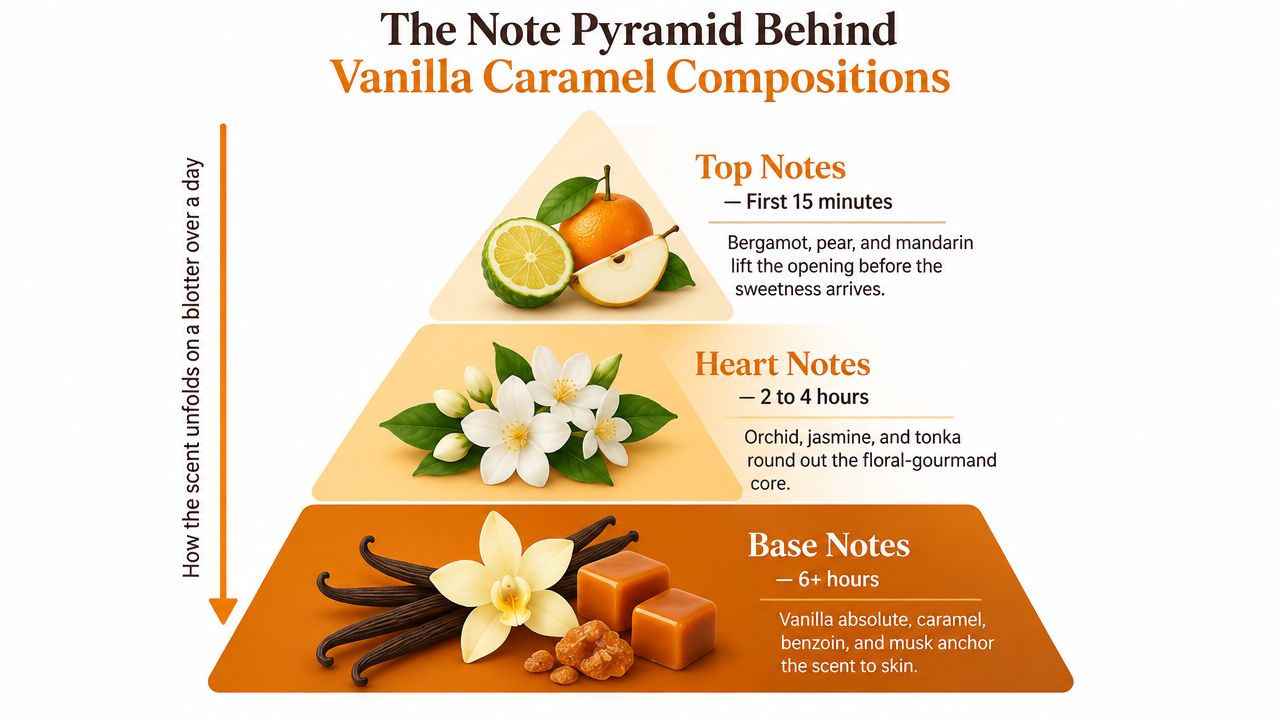
The opening lifts the sweetness
Top notes appear first and usually evaporate sooner. Bergamot, mandarin, pear, and pink pepper can give a vanilla caramel perfume a brighter entrance, so the first spray doesn't smell like a solid block of sugar. On a blotter, you might notice citrus peel, juicy fruit, or a peppery sparkle before the dessert effect develops.
These notes don't necessarily define the perfume's lasting character. They create contrast. A mandarin opening can make the later caramel feel warmer, while pink pepper can add a dry, fizzy edge.
The heart connects brightness to cream
Heart notes form the middle of the composition. Jasmine, orchid, almond, coconut, coffee, and spices can bridge the fresh opening and the heavier base. Almond may suggest marzipan or biscuit, coffee can make caramel darker, and coconut can give vanilla a smooth, tropical texture.
Tonka bean deserves special attention. It can smell like vanilla, almond, hay, and soft spice at the same time, so it often helps a gourmand feel richer without adding a literal caramel note.
The base creates the lasting impression
Vanilla absolute, benzoin, labdanum, musk, sandalwood, and caramel accords anchor the perfume. These materials are less about a quick burst and more about the dry-down, the stage where you smell the fragrance after it has settled on skin.
Marketing copy may use terms such as burnt sugar, praline, toffee, vanilla bean, amber, or resin. They point you towards the balance. “Praline” usually suggests nuts and sugar. “Benzoin” can add a sweet, resinous quality. “Burnt sugar” often signals a darker caramel effect.
Some formulas use sweet-smelling aroma materials such as ethyl maltol to create a cotton-candy or caramelised-sugar impression. A fragrance doesn't need a literal caramel extract to smell like caramel. Perfumers combine materials to produce the sensory effect.
Concentration also changes the experience. An EDP may feel fuller than an EDT, while an extrait or parfum can place more emphasis on the base and wear closer but denser. Still, concentration alone doesn't guarantee performance. Formula design, skin chemistry, application, and weather all matter.
Reading rule: If the notes list citrus on top but vanilla, tonka, benzoin, and caramel underneath, expect a bright opening followed by a warm, sweet dry-down.
Designer, Middle Eastern, and Inspired Alternatives Compared
Philippine shoppers generally encounter vanilla caramel scents through three lanes. Designer perfumes offer recognisable branding and polished compositions. Middle Eastern houses often favour strong EDPs, rich amber, vanilla, musk, and sometimes oud. Inspired alternatives borrow a familiar fragrance direction at a lower entry cost, although the quality and accuracy can vary widely between sellers.
The Philippines is strongly dependent on imported perfume supply. In 2023, perfume imports reached USD 54.3 million while exports were USD 3.71 million, according to OEC trade data reported in this Philippines perfume market overview. That import structure helps explain why international designer and Middle Eastern options are prominent in local retail.
| Category | Typical Longevity | Projection | Sweetness | Oud Presence | PH Price Range (PHP) |
|---|---|---|---|---|---|
| Designer | Varies by formula and concentration | Polished, usually controlled | Moderate to high | Usually low or absent | Varies by brand and retailer |
| Middle Eastern | Often designed for a rich, persistent impression | Moderate to strong | Moderate to very high | None to prominent | Varies by house, bottle, and seller |
| Inspired | Depends heavily on the formula and seller | Light to strong | Usually follows the reference style | Usually low, unless added by the maker | Varies widely |
Designer benchmarks such as Mugler, Lancôme, and YSL-style gourmands often feel balanced and easy to recognise. They may be more office-friendly when applied lightly, but a soft designer gourmand can seem less forceful after a sweaty commute.
Middle Eastern houses such as Lattafa, Maison Alhambra, Afnan, and Armaf cover a broad range. Some vanilla blends are creamy and accessible; others add oud, saffron, woods, or heavy amber. Oils can cling closely to skin, while EDPs may create a more noticeable scent cloud. Don't assume every Arabian bottle smells strongly of oud. Check the note list and test the dry-down.
Inspired alternatives can make sense if you're exploring the family or want a daily-use bottle without paying for a prestige label. The risk is inconsistency. A convincing opening may dry down thin, overly alcoholic, or much sweeter than expected.
For a broader comparison of fragrance lanes, see this guide to Middle Eastern perfumes versus designer perfumes. Choose designer for familiarity and finish, Middle Eastern for richer projection and value-led exploration, or inspired options when experimentation matters most.
How to Apply and Layer Vanilla Caramel Perfume
Start with clean, lightly moisturised skin. An unscented lotion or a thin layer of petroleum jelly on pulse areas gives the perfume a less dry surface to sit on. You don't need a thick coating. Too much product can alter the texture of the fragrance and make the first spray feel greasy.
For a vanilla caramel EDP, begin with two or three sprays. Place one behind each ear and use the remaining spray on an inner elbow, chest, or wrist. The aim is distribution, not saturation. If you're commuting in direct heat, start lower and add later rather than applying heavily before leaving home.
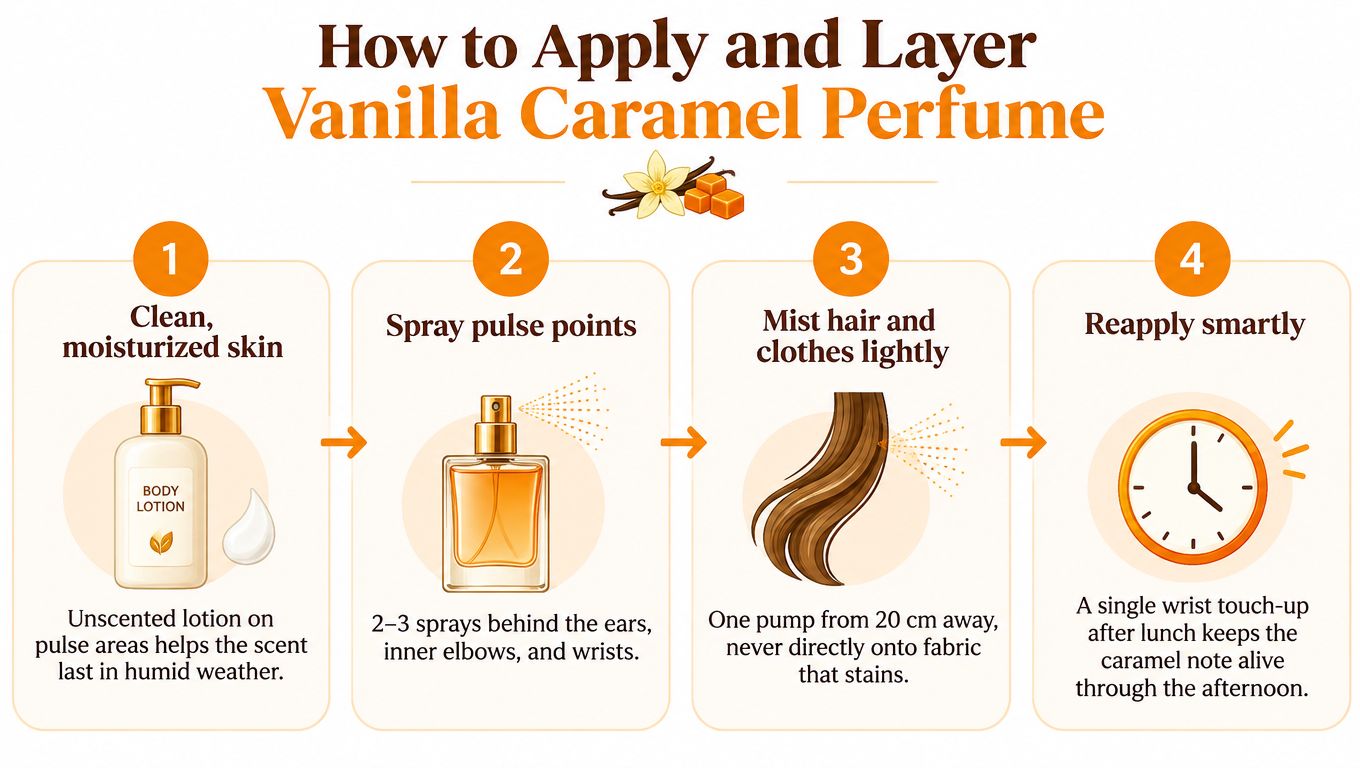
Apply without flattening the opening
Don't rub your wrists together after spraying. Friction can disturb the early top notes and make it harder to notice how the fragrance naturally changes. Spray, let the liquid settle, and give it time to dry.
A practical starting guide:
- EDT: Use a light application for hot outdoor plans, particularly if the formula is already sweet.
- EDP: Try two or three sprays, then assess the scent after you've spent time outside.
- Parfum or extrait: Start with one or two carefully placed sprays. These can feel denser even when they sit close to skin.
You can mist one spray onto clothing, but test the fabric first. Dark juice, oil-based formulas, and some natural materials may leave marks. A spray from a short distance is safer than pressing the nozzle directly against a shirt.
Layer for texture, not noise
Vanilla lotion is the obvious partner, but it isn't the only option. Almond can make the perfume feel biscuit-like, coffee can deepen the caramel, and tonka can add a soft almond-vanilla bridge. Use an unscented base if you want the perfume's original character to remain clear.
Strong fresh citrus or sharp white florals may compete with the caramel. If you want contrast, choose a clean musk or a restrained woody scent instead of stacking several loud perfumes.
The video below gives a visual refresher on application technique:
Seasonal and Climate Wearability in the Philippines
Vanilla caramel doesn't wear the same way across the country or even across one day. In humid heat, the sweetness can become more noticeable, and a dense formula may fill a small space quickly. In rain or cool indoor air, the same perfume can feel softer and more intimate.
For a hot commute, use fewer sprays and place them away from the front of the neck. A wrist or inner-elbow application lets you check the fragrance without creating a heavy cloud around your face. If you're spending the afternoon outdoors in Cebu or Tagum, a lighter EDT or a fresh vanilla-citrus composition is usually easier to manage than a thick caramel extrait.
Three practical weather modes
A rainy day can make a gourmand feel closer to skin and more comforting. That works well for a café visit, an evening in Baguio, or a relaxed indoor plan. It doesn't mean rain automatically improves every perfume. A syrupy oil can still feel dense if you apply too much.
Air-conditioning creates another kind of contrast. A fragrance may seem quiet inside a cold office, then project more strongly once you step outdoors. Give the perfume time before adding more. Your nose can also adjust quickly, so ask a trusted colleague or friend for feedback rather than relying only on repeated wrist-sniffing.
| Setting | Best Format | Spray Count | Notes to Pair |
|---|---|---|---|
| Humid outdoor commute | Light EDT or airy EDP | 1–2 | Citrus, pear, clean musk |
| Air-conditioned office | Moderate EDP | 2 | Soft woods, restrained musk |
| Rainy café day | Creamy EDP | 2–3 | Almond, sandalwood, gentle spice |
| Cooler evening or date night | Rich EDP or extrait | 1–2 | Benzoin, amber, tonka |
| Gym or intense outdoor activity | Fresh vanilla mist or light EDT | 0–1 | Avoid heavy caramel and oud |
Local retail listings show vanilla, caramel, praline, and warm gourmand profiles across EDP and oil formats, with listed prices ranging from roughly ₱89 to ₱2,394.8 in the Philippine market on this local gourmand fragrance catalogue. That range covers very different formulas, so price alone won't tell you how a scent behaves in heat.
Buying Vanilla Caramel Perfume Safely in the Philippines
Online fragrance shopping is convenient, but sweet perfumes are also easy to imitate. A bottle can look convincing in a small listing photo while the packaging, batch information, or liquid tells a different story. Treat authenticity as a checklist, not a feeling.
Start with the seller. Department-store counters, brand boutiques, and established beauty retailers usually offer clearer purchase records and return channels. Grey-market listings on Shopee, Lazada, and Facebook groups may cost less, but you'll need to inspect the seller's history, photographs, policies, and product description more carefully.
Check the bottle before the price
Look for these signals:
- Packaging quality: Factory cellophane should look even and deliberate, not loosely taped or badly folded.
- Matching codes: The batch code on the box should correspond with the code printed or etched on the bottle.
- Clear printing: Check logos, spacing, labels, cap fit, and bottle finishing against official product photos.
- Traceable purchase: Ask whether the seller can provide an invoice or proof of sourcing.
- Return terms: Read the policy before opening the bottle, because opened fragrance may have different return conditions.
A batch code is useful, but it isn't the only test. Codes can be copied, and websites that decode batch numbers may not confirm that the liquid inside the bottle is genuine. Use brand information where available, then compare the physical product with official images.
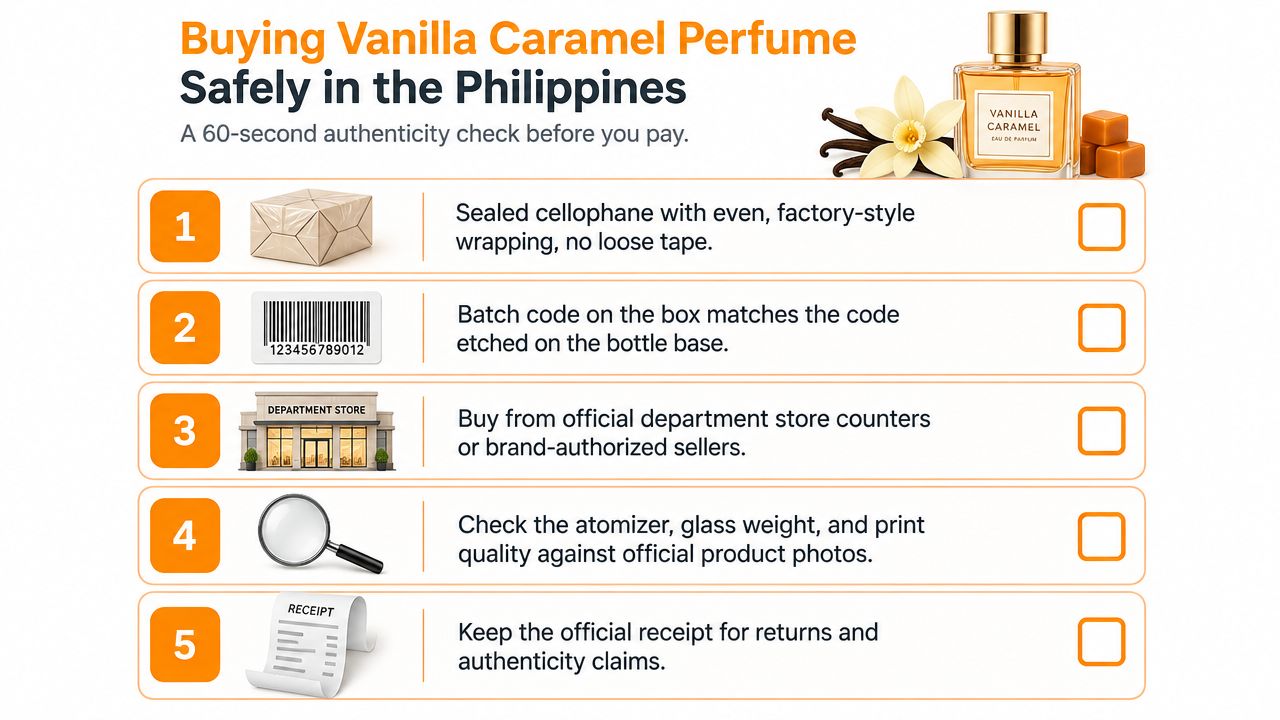
Red flags that deserve caution
A suspiciously low price for an imported Middle Eastern oil should prompt questions, especially if the listing uses blurry stock photos or refuses a packing or unboxing video. Decants in unmarked atomisers aren't automatically bad, but they should be clearly labelled with the fragrance name, fill amount, and seller details.
For overseas orders, check current Bureau of Customs guidance before paying. Import treatment can depend on the order, declared value, shipping arrangement, and applicable rules. Don't rely on a casual seller message about duties or seizure risk. If a seller claims a specific threshold or fee, ask for the current official basis.
The Philippines online perfume buying guide offers another checklist for comparing online sellers and authenticity signals.
Request a tester or swatch when possible. On skin, wait through the opening and dry-down before deciding. Keep screenshots of the listing, messages, receipt, and packaging. Those records make a return or authenticity claim much easier if the delivered bottle doesn't match the description.
Matching Vanilla Caramel to Your Budget and Occasion
You can narrow the choice quickly by asking three questions: How much can I spend, where will I wear it, and how much sweetness can I tolerate in heat? The answer usually matters more than chasing a particular note list.
For an everyday option under PHP 1,500, look at body sprays, EDTs, oils, and inspired versions with a lighter caramel effect. These work for mall errands, casual days, and short indoor plans. Apply modestly before a commute, because a low-priced fragrance can still project strongly if the formula is sweet or oil-heavy.
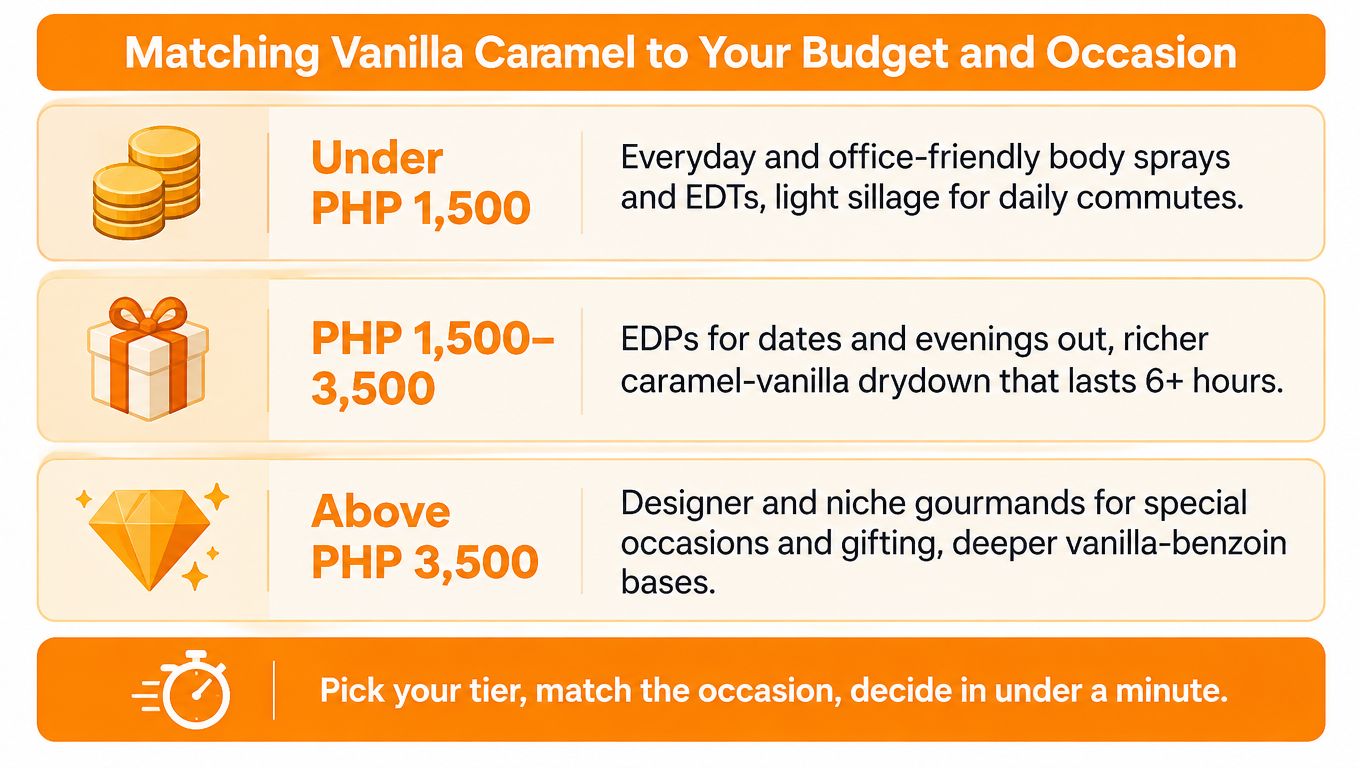
Under PHP 1,500
Choose this tier if you're testing whether you enjoy gourmand perfume at all. Look for vanilla-led blends, lighter caramel, or a body mist you can refresh without feeling precious about daily use. An inspired scent can be practical here, but test it on skin because the opening may not predict the dry-down.
PHP 1,500 to PHP 4,000
This is the flexible middle lane for many shoppers. A Middle Eastern EDP can offer a fuller vanilla-amber base for dates, dinners, and evenings out, while a smoother inspired alternative may suit regular office-to-dinner wear. Check for oud, saffron, and dense amber before buying if you want a soft dessert effect rather than a dramatic oriental profile.
A Manila-based Scentsmith catalogue lists “Vanilla Caramel” and “Praline Vanilla” as gourmand EDP entries and describes the line as typically lasting 6–8 hours in its fragrance catalogue. Treat that as a useful local reference point, not a promise for every bottle. Your skin, weather, and application will change the result.
Above PHP 4,000
This tier suits buyers who want designer recognition, a polished bottle, or a special-occasion fragrance. Use richer vanilla-benzoin or extrait styles for date nights, formal gatherings, and cooler Tagaytay drives rather than automatic daily spraying. A deeper scent can be beautiful in an air-conditioned venue but excessive during a long outdoor afternoon.
Three quick rules will keep the decision simple:
- Match concentration to occasion weight. Lighter formats suit daytime heat, while dense EDPs and extraits belong in controlled indoor settings or cooler evenings.
- Prioritise bottle size for daily use. A practical larger bottle may offer better routine value than a small prestige bottle you save for rare events.
- Reserve oud-and-vanilla blends for cooler plans. Oud, amber, and caramel can create a striking evening profile, but they need more space and restraint than a soft vanilla musk.
Dubai Fragrance Shop PH offers Middle Eastern EDPs from houses including Lattafa, Afnan, Armaf, Rasasi, Arabiyat, Rayhaan, and French Avenue, with PHP ordering and nationwide Philippine fulfilment. If you're comparing imported vanilla, caramel, amber, or oud-led options, visit Dubai Fragrance Shop PH to browse the available range and choose a bottle that fits your budget and occasion.