

Perfume Notes Finder: Your Guide to Scent Layers in 2026
You're scrolling through a long list of Arabian-style EDPs, attracted by the bottles and familiar brand names, but still wondering what each one will smell like on your skin. One description mentions rose, another oud, another vanilla and amber, yet the words don't immediately tell you which scent will suit a humid commute, an air-conditioned office, or an evening out.
A perfume notes finder makes that decision easier. It combines a simple scent vocabulary, a trained way of smelling, and online product information that turns a note list into a scent profile you can understand. You don't need to memorise chemistry or become a professional perfumer. You need to recognise the main families, understand how a fragrance changes over time, and compare the top, heart, and base before buying.
Table of Contents
- What a Perfume Notes Finder Actually Does for You
- How Perfume Notes Are Built From Top to Base
- Training Your Nose With a Simple Smelling Protocol
- The Five Note Families You Should Know First
- Using Online Note Finders and Store Filters to Search Smart
- Putting the Method to Work on Two Arabian EDPs
- Smart Habits When You Shop for Notes Online
What a Perfume Notes Finder Actually Does for You
A perfume notes finder helps you move from “I like this bottle” to “I understand the kind of scent this could become on my skin.” That shift matters when you're comparing imported fragrances, because Philippine shoppers encounter perfumes from many origins and houses. Trade data records USD 54.3 million in Philippine perfume imports in 2023, compared with USD 3.71 million in exports, and identifies suppliers including Singapore, China, France, Spain, and Italy in the category (Philippines perfume market trade data).
The tool itself is only one part of the process. Your nose supplies the personal judgement. Online notes supply a useful starting map. Together, they help you decide whether a scent deserves sampling before you spend money on a full bottle.
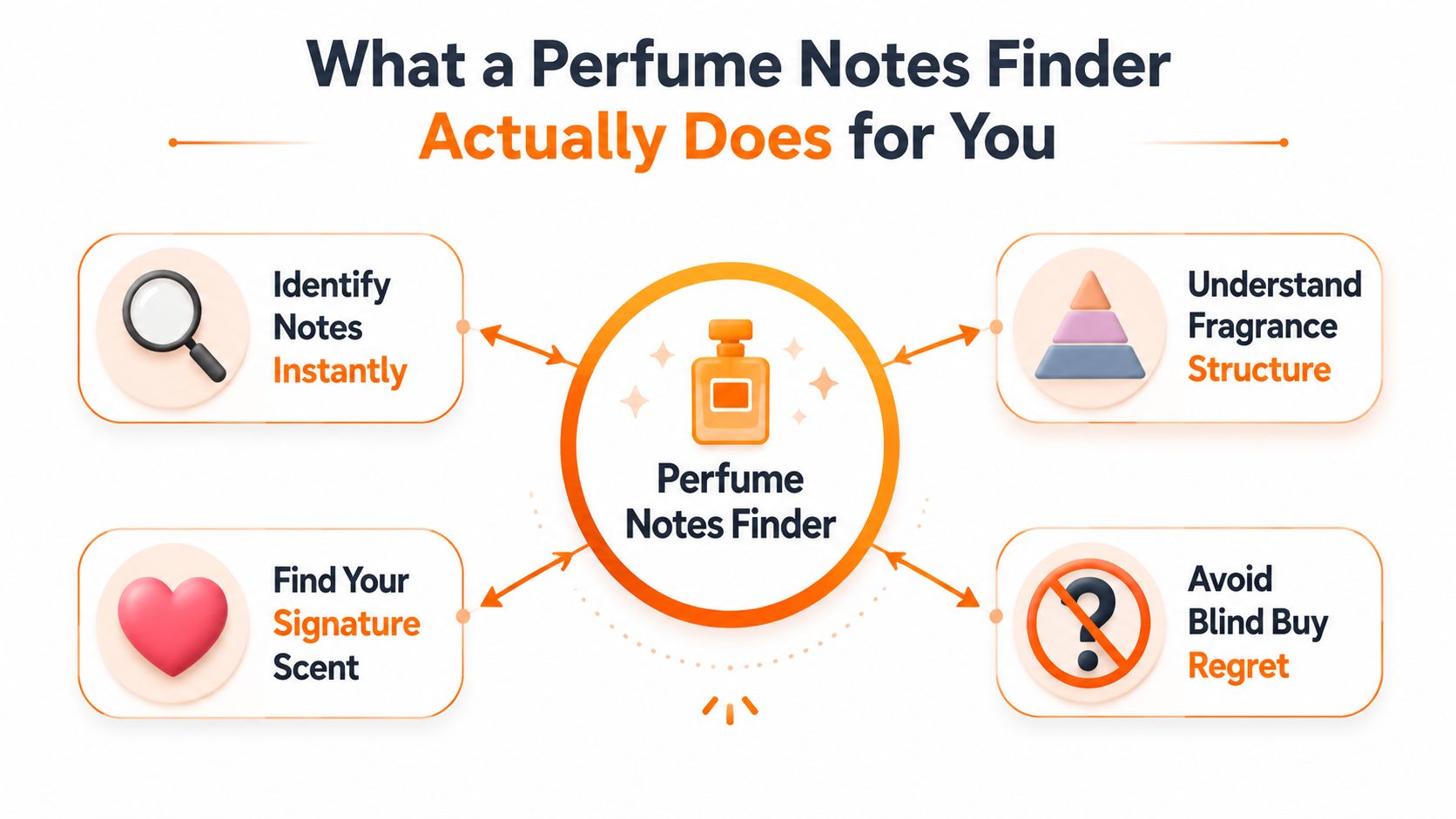
Use the pyramid as your first filter
Every fragrance description becomes easier to read when you sort it into three layers:
- Top notes create the opening impression. Citrus, herbs, and light spices often appear here.
- Heart notes form the central character. Florals, fruits, and green accords usually become clearer after the opening settles.
- Base notes provide depth and the lasting dry-down. Woods, musks, ambers, and resins commonly sit in this layer.
This pyramid gives you a fast way to reject unsuitable options. If you dislike sweet fragrances, a listing built around vanilla, caramel, or tonka may not be a sensible blind buy, even if the brand appeals to you. If you prefer clean scents for work, a fresh profile with a restrained woody base may be easier to wear than a dense oud and amber composition.
Practical rule: Read the base before you judge the bottle. The opening may attract you, but the dry-down usually decides whether you'll keep wearing it.
The Philippine perfume market was valued at about USD 349 million in 2024 and is projected to reach USD 702 million by 2030, with an estimated 13.90% CAGR from 2025 to 2030, according to MarkNtel Advisors' Philippines perfume market report. More variety creates more choice, but it also makes a clear note vocabulary more valuable.
How Perfume Notes Are Built From Top to Base
A perfume can greet you with bright bergamot, unfold into rose or jasmine, then settle around sandalwood, amber, or musk. Its scent changes because lighter, more volatile materials appear quickly, while heavier materials remain on the skin and clothing longer. Reading these stages helps a perfume notes finder become more than a list of ingredients. It becomes a way to follow the fragrance's development.
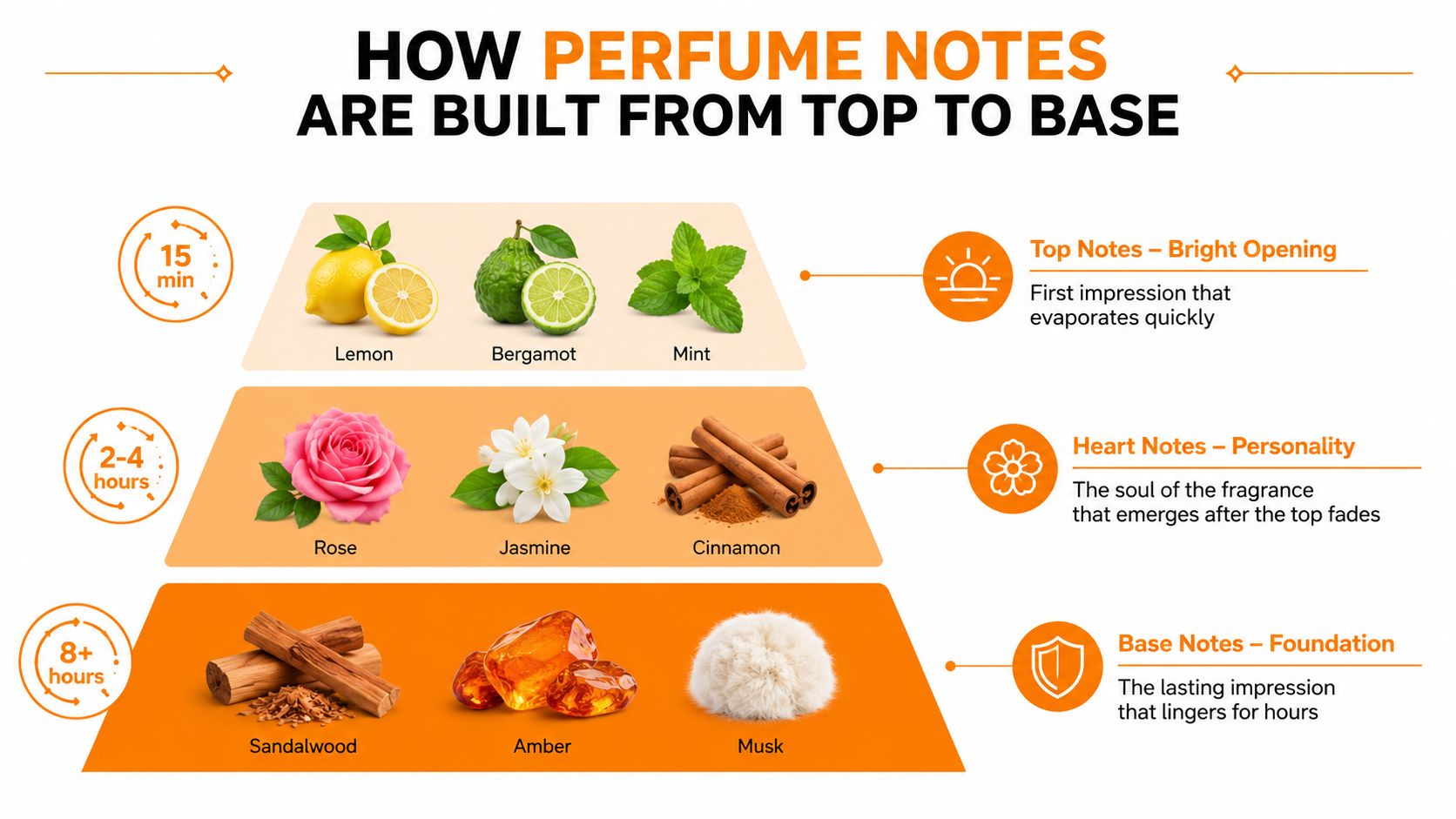
Top notes create the first impression
Top notes are the first details you notice after spraying. Lemon, bergamot, mint, herbs, and light spices can make a fragrance feel sparkling, crisp, or energetic. Because this layer arrives with strong initial impact, beginners often identify it easily. Give the perfume time before deciding whether its overall style suits you.
A citrus opening may develop into flowers or fruit, then become creamy, woody, musky, or sweet at the base. An opening invites closer attention, but the full fragrance may tell a different story.
Heart notes reveal the personality
As the top notes soften, heart notes take over and give the perfume its main direction. Rose, jasmine, lavender, cinnamon, peony, and other florals or spices can make the scent feel romantic, polished, playful, warm, or dramatic. This middle stage works like the conversation that follows a greeting. It provides more context about the fragrance's character.
A floral scent may still feel powerful when amber, musk, or woods support it underneath. A perfume described as fruity can also turn warmer as vanilla, tonka, or resinous materials emerge.
Base notes shape the dry-down
Base notes form the foundation you experience later. Sandalwood can feel creamy and smooth, cedar dry and clean, while oud contributes a dark woody character. Amber and musk add warmth and persistence. Middle Eastern EDPs often give these deeper materials a noticeable role, so continue smelling after the bright opening fades.
For example, Maison Alhambra Delilah Blanc EDP is presented as a floral fragrance with subtle warmth. Using note-family vocabulary, you can read that description as a floral-led scent with a polished, warm finish rather than a purely fresh perfume.
The first spray shows how a perfume enters. The dry-down shows how it lives with you.
Training Your Nose With a Simple Smelling Protocol
You can train your nose without buying a large collection. The important part is consistency. Use a tester strip or blotter for an initial impression, then test a small amount on skin when you want to understand how the perfume behaves with your own body chemistry.
Follow a calm smelling rhythm
Start with one spray on a blotter. Hold it slightly away from your nose and take short, gentle sniffs. Avoid pulling in a long breath, because an intense first inhalation can overwhelm your sense of smell and make every later scent seem flat.
Allow the perfume to settle before making a decision. Notice the opening after about 30 seconds, check the developing heart after around 15 minutes, and return to the scent after at least an hour to assess the base. These time points are practical observation markers, not guarantees. Temperature, skin, application amount, and the formula itself can change the pace.
When you test on skin, choose the wrist or inner elbow and leave the perfume undisturbed. Rubbing your wrists together can interfere with the opening and makes comparison less reliable. Don't test too many scents at once, especially in a crowded, heavily perfumed shop.
Record what your nose notices
Write down simple impressions instead of trying to identify every ingredient. “Bright and sour,” “soft white floral,” “dry wood,” “sweet cream,” and “smoky warmth” are useful observations. You can compare those impressions with the listed notes later.
A small sample routine can help you build confidence. The perfume sample bottles guide is useful when you want to explore before committing to a full bottle.
Try a focused drill with four contrasting materials or perfumes:
- Citrus: Notice brightness, tartness, and lift.
- Rose: Look for freshness, powder, sweetness, or spice.
- Oud: Observe whether it smells dry, smoky, leathery, or sweetened.
- Vanilla: Separate creamy sweetness from sugary or spicy effects.
Reset between tests with unscented cotton, fresh air, or a short break. Coffee beans are commonly used, but they can add their own smell, so they shouldn't replace a clean pause. The aim is to teach your brain a repeatable comparison method, not to force an exact answer.
The Five Note Families You Should Know First
Individual notes can feel confusing because perfumers combine them into accords. Start with families instead. A family gives you a broad direction, while the specific note tells you how that direction is expressed.
A Philippine pilot study of 88 designer-perfume users found that fresh notes ranked as the top scent profile, with floral close behind, while woody and oriental profiles received lower mean scores. The respondents also reported changing scents to suit Philippine weather, which supports a practical routine of checking family, strength, and climate before choosing a fragrance (Philippine pilot study on perfume users).
| Family | Typical notes | Mood | Best for |
|---|---|---|---|
| Fresh | Citrus, aquatic accords, green notes | Clean, bright, easygoing | Warm days, office settings, daytime wear |
| Floral | Rose, jasmine, tuberose, lavender | Soft, elegant, romantic, expressive | Daily wear, polished occasions, floral preferences |
| Woody | Oud, sandalwood, cedar, vetiver | Dry, smooth, grounded, often unisex | EDP lovers, evening wear, confident signatures |
| Oriental | Amber, incense, spices, resins | Warm, rich, enveloping | Cool evenings, events, dramatic dry-downs |
| Gourmand | Vanilla, caramel, coffee, chocolate | Sweet, creamy, edible, comforting | Date nights, cosy moods, sweet-scent preferences |
Read families as combinations
A fragrance rarely belongs to only one family. A rose-and-oud perfume may feel floral at the heart and woody in the base. Vanilla with amber can read gourmand and oriental at the same time. Fresh citrus over musk may feel clean at first, then become soft and skin-like.
This is why family screening works better than searching for one isolated note. If you type only “rose”, you may find airy florals, spicy roses, dark oud compositions, and sweet rose-and-vanilla scents. Adding a second preference, such as “rose and musk” or “rose and oud”, gives your search more direction.
If terms such as oriental, amber, and resin feel unfamiliar, the guide to oriental fragrance meaning can help you interpret the language used in product descriptions.
For a beginner, remember the family's practical signal:
- Fresh usually feels lighter and cleaner.
- Floral often centres flowers and may lean soft or elegant.
- Woody gives structure and can read masculine, feminine, or unisex.
- Oriental brings warmth, spice, incense, and resinous depth.
- Gourmand creates a sweet or edible impression.
The family tells you where to look. Your skin test tells you whether the result suits you.
Using Online Note Finders and Store Filters to Search Smart
You are comparing two fragrances online, but “a good perfume” is too broad a search. Start with two or three notes or accords you have enjoyed on skin. Searches such as “vanilla amber”, “fresh musk”, or “rose oud” create a workable direction, while leaving room for the fragrance to smell different on you.
Read the product page in layers
Begin with the note pyramid, if the listing provides one. Check the concentration next. An EDP uses a different format from an EDT, yet concentration cannot predict personal preference by itself. Read the accords and brand description, and treat references to comparable or inspired compositions as clues rather than evidence of an identical scent.
Set filters using the questions you already answered during your smelling practice:
- Family: Select fresh, floral, woody, oriental, or gourmand.
- Collection: Compare women's, men's, or best-seller groupings when they fit your search.
- Concentration: Keep EDP options separate from other formats.
- Performance language: Read longevity and sillage descriptions as expectations to test, not fixed promises.
Dubai Fragrance Shop PH's online catalogue includes Middle Eastern EDPs from houses such as Lattafa, Afnan, Armaf, Rasasi, Arabiyat, Rayhaan, and French Avenue. Its men's, women's, and best-seller collections let Philippine shoppers focus on products offered through a local online retailer instead of sorting through a broad database.
Use note-family terms to make the filters more useful. For example, a search for a warm vanilla EDP can combine gourmand or oriental language with a preference for a deeper base. A fresh musk search can point you toward a cleaner, softer direction. The filter narrows the shelf. Your nose still checks the result.
Compare before you add to cart
Keep two or three candidates. Copy each fragrance's top, heart, and base notes into a comparison note on your phone. Mark the dominant family, sweetness level, base depth, and setting where you would most likely wear it.
Ask four practical questions:
- Does the opening include notes I already enjoy?
- Will the heart feel comfortable in my usual setting?
- Do the base notes match my tolerance for sweetness, woods, musk, or oud?
- Can I test the fragrance before buying a full bottle?
That last question protects your shortlist from overconfidence. A pilot study noted that blind purchases occur among perfume users, while note-based recommendations provide a more structured way to reduce uncertainty. Use the finder to select candidates, then let your skin test make the final decision.
Putting the Method to Work on Two Arabian EDPs
A perfume notes finder earns its place when you use it on real listings. Suppose you are comparing two Arabian EDP profiles, one gourmand and vanillic, the other spicy and woody. The goal is to see how the same note-based questions surface different recommendations for each profile.
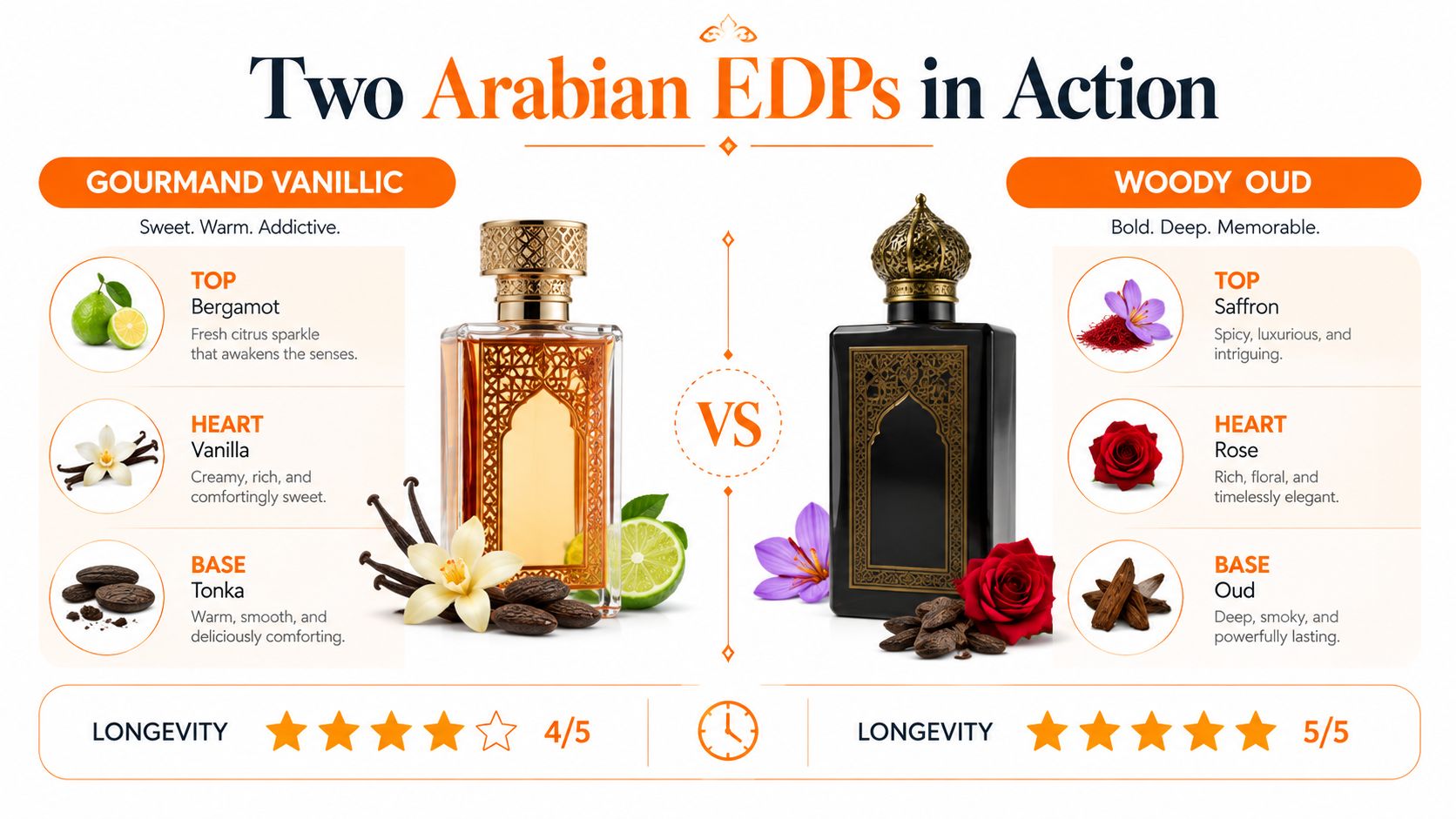
Compare the scent direction first
Lattafa Yara works as the gourmand-vanillic example. Read its profile through your own routine: would a creamy, sweet scent suit your clothing, habits, and usual occasions? During a humid commute, apply lightly and let it settle before judging its comfort. In an air-conditioned office or evening setting, the softer character may feel easier to wear.
Rasasi Hawas Kobra gives you a bolder spicy-woody direction. Examine the movement from a sharper opening to a more assertive middle and a deeper base. That progression can suit someone who enjoys a noticeable EDP presence. If you prefer discreet freshness in close indoor spaces, the same profile may feel too forceful.
For product-specific context, read the Hawas Kobra fragrance guide. Use the note description and scent family as your evidence, rather than relying on the product name or gender category alone.
Match each profile to a use case
| Use case | Gourmand vanillic direction | Spicy woody direction |
|---|---|---|
| Daily office wear | Consider if sweetness stays comfortable in your workplace | Consider if the dry-down remains controlled indoors |
| Date night | Useful for a soft, warm, inviting mood | Useful for a more confident, noticeable impression |
| Gift for a friend | Safer when the recipient already enjoys sweet scents | Better when the recipient likes woods, spice, or stronger EDP styles |
Your skin can revise the online impression. Spray each candidate separately, record the opening, revisit the heart, and assess the dry-down later. Heat, skin chemistry, and application amount may make a fragrance seem sweeter, sharper, or woodier than its listing suggests.
The following video offers another visual reference as you practise comparing fragrance structure.
A useful shortlist contains reasons, not only excitement. You might choose one because its floral heart and warm base suit your routine, or skip another because its woody dry-down feels wrong for your office. That clear explanation shows the method working.
Smart Habits When You Shop for Notes Online
Branding can attract your attention, but notes give you a more useful selection filter. An “inspired by” reference may help you understand a general direction, yet it doesn't guarantee that the fragrance will behave exactly like the composition you know. The pyramid, family, concentration, and your own skin test provide stronger decision points.
The Philippine category is expanding from about USD 349 million in 2024 to a projected USD 702 million by 2030, according to MarkNtel Advisors' market forecast. As more products enter the shopper's field of view, a small note vocabulary keeps saving time.
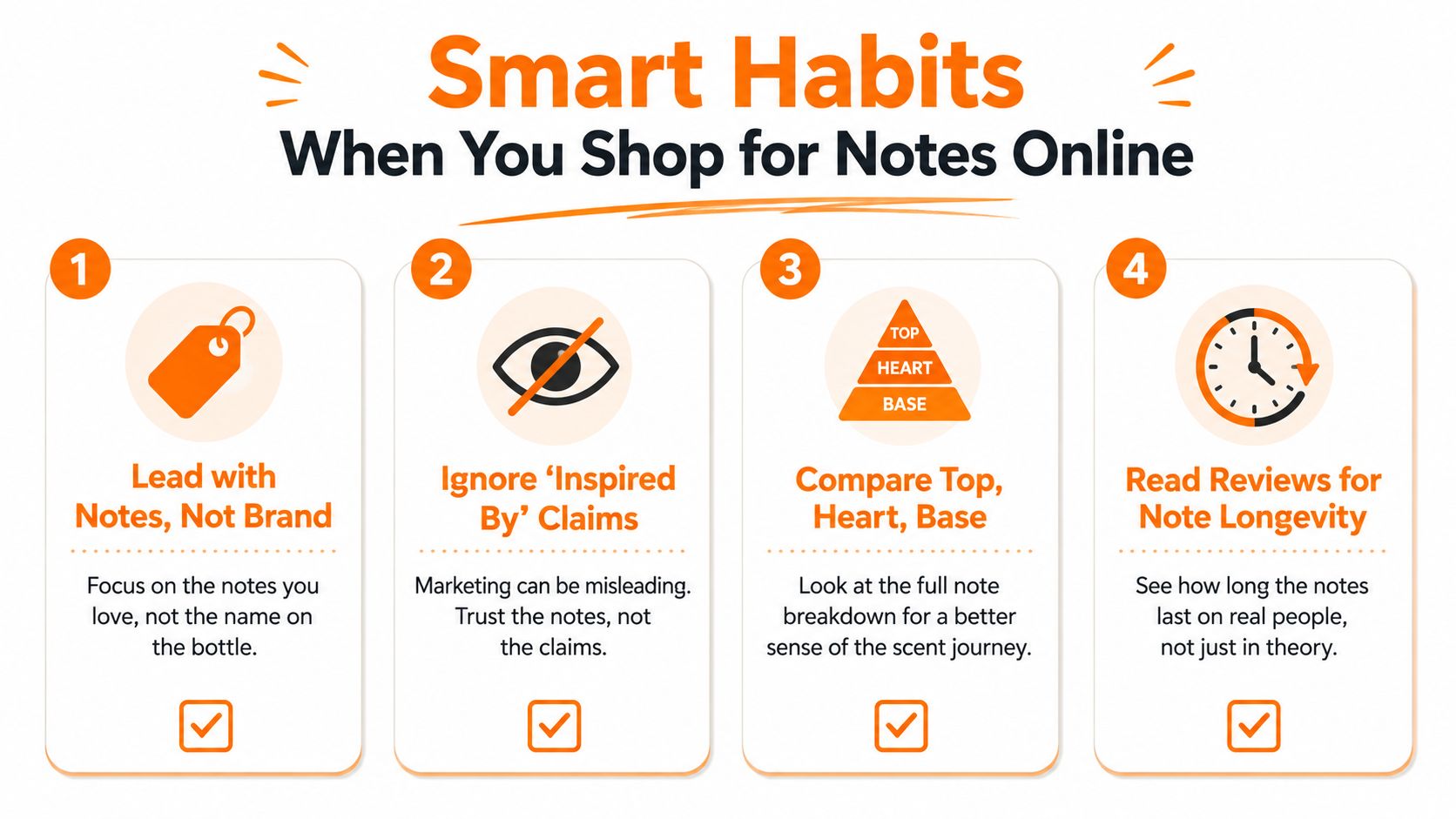
Keep these habits beside you while browsing:
- Lead with notes: Start with two or three families or notes you already enjoy.
- Question comparisons: Use “inspired by” descriptions as orientation, not certainty.
- Check the pyramid: Compare top, heart, and base before judging the bottle.
- Track your dry-downs: Write down which base notes perform well on your skin after repeated wear.
Sample in the evening or in a cooler environment first if a fragrance feels dense. Then test it during the kind of day when you'd normally wear it. Begin with one family this week, perhaps fresh citrus or vanilla, and build your personal perfume notes finder vocabulary from there.
Dubai Fragrance Shop PH offers Middle Eastern EDPs from houses including Lattafa, Afnan, Armaf, Rasasi, Arabiyat, Rayhaan, and French Avenue, with collections organised for men, women, and best sellers. Visit Dubai Fragrance Shop PH to compare product descriptions by note direction, shortlist scents for sampling, and choose an Arabian fragrance with greater confidence.